

Forget Everything You Know
A Case for Knowing Less in an Age of Intelligence (Featuring: Faust! Marlowe! Goethe! Rousseau! Heidegger! Keats! Rilke!)

We have mapped the genome and photographed black holes. We know that somewhere in the ocean there are octopuses that edit their own RNA, fish that generate their own light, frogs that freeze solid and survive the winter, and sharks that were alive before Shakespeare was born. We know what happens in the brain of a rat anticipating another bump of cocaine. We know that trees communicate through fungal networks underground, that there are lakes sealed beneath Antarctica for millions of years, that your stomach contains neurons, that planets make sounds. We know how many microplastics are currently in human blood, breast milk, placentas, rainwater, and clouds. We know the temperature of hell as Dante imagined it. We know the precise pressure required to turn carbon into diamonds. We know the universe is expanding faster and faster and faster and faster. We know what dead stars are made of. We know how many calories are in a banana.
We could—we will!—gag and choke on all of this knowing.
There is almost no nescience left; no civilized reason to be ignorant. No silence or darkness or need to wonder. Satellites photograph the planet continuously. A teenager in Nebraska can watch live footage of a stranger eating noodles in Seoul at three in the morning while reading translations of Sumerian poetry and ordering magnesium gummies designed to optimize REM sleep (and worry not, that sleep will be recorded and rated). The medieval mystics believed angels moved the stars; but we have particle accelerators the size of cathedrals—the Large Hadron Collider alone runs 27 kilometers beneath the France-Switzerland border—smashing invisible matter apart in the dark, trying to discover what reality is made of. (The current answer appears to be vibrations, probability fields, and an alarming amount of nothingness.)
Every piece of information is available. Every fact fully explicable. Everything has a name, a theory, model, a schema, a system, a diagnosis, a lecture, a subreddit, a twelve-week course. And I say this lovingly and wildly self-aware, as a proud participant of the publishing industry—an industry built on the sacred premise that the final missing piece of understanding human existence is…another book! Hell, I write this very publication—a publication rooted in giving language and understanding and philosophical background to the enigmatic.
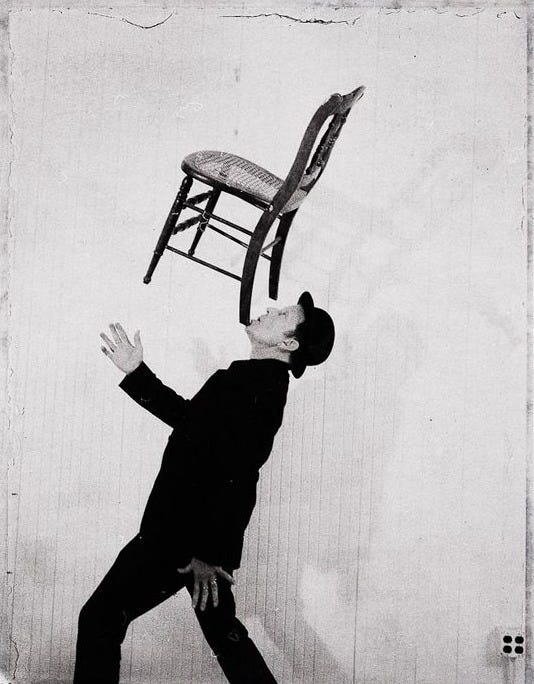
“Everything is explained now. We live in an age when you say casually to somebody ‘What’s the story on that?’ and they can run to the computer and tell you within five seconds. That’s fine, but sometimes I’d just as soon continue wondering. We have a deficit of wonder right now.”
— Tom Waits
And yet, after all of it—the genome and the black holes and the rats and the bananas and the squids and the stars and the microplastics—many of the oldest forms of suffering remain stubbornly intact. We still do not know how to love without risking devastation, how to confront mortality without fear, how to endure suffering without resentment, or how to find meaning in a universe that offers no guarantees. Knowing has not closed the biggest gaps, and if anything, there are days when it seems to have made the gap just more humiliatingly measurable. All that light thrown at the distance between us and the world, illuminating in granular detail exactly how far we remain from belonging to it.
It’s not all that abundant information that is the problem necessarily. It’s more so that we have confused explanation with experience—we live as if the name for the thing is the thing itself.
We once thought the Earth was the center of everything, and why wouldn’t we? It was the thing beneath our feet; it was home. We thought the stars were angels, or the souls of the dead, or fires lit by gods who needed to see by night. We thought lightning was a personal, specific, directed kind of anger aimed at someone who had earned it. We thought the wind was breath. We thought the rainbow was a promise. We thought the earth rested on the back of a great turtle, and when pressed on what the turtle stood on, we said, another turtle! We thought volcanoes were doors to the underworld left ajar. We thought dreams were dispatches from somewhere else, and so we paid attention to them, and the dead who appeared in them were paying an actual visit, and you could ask them questions and they would answer. We thought the dead stayed nearby and needed feeding, so we fed them; needed direction, so we buried them with maps; were thirsty, so we left water at the door. We thought illness in the crops meant someone in the village had committed a wrong, and that the wrong and the dying wheat were connected. We thought bile explained everything that went wrong inside a person—too much black bile and you sank into melancholy, too much yellow and you raged, too much phlegm and you went cold and slow and indifferent to the world, and the cure was simply to drain the offending fluid out to restore the balance. We thought music could move stones and tame animals and make the underworld relent. We thought the first humans were made from clay, or corn, or breath, or the body parts of a defeated god or of another human’s rib. We thought the body of the sky was a woman arched above us and the body of the earth was a man below, and what passed between them was weather and season and the reason for everything. We thought the sun was a chariot driven by a young man who had to be careful not to fly too close to the ocean, and that on the days he got it exactly right, we called it beautiful weather. And we also thought the sun had to be helped—that without the right words said in the right order at the right time of year, it might not come back. And every morning it came back. And we said: you see, it worked!
Faustian Times
It’s late and the candles have burned low. Faustus sits alone in his study surrounded by every book he has ever needed, and he has needed all of them, and he has read all of them, and he is, finally, done. Medicine, philosophy, law, theology: he has mastered them all. (Especially theology, which promised the most and, he has decided, delivered the least.) He has gone as far as a human mind can travel inside each of these disciplines, and at the border of each one he found a devastating limit. No matter what summit of human knowledge he reaches, he is and always will be still mortal, still bounded, and still not God.
So he turns to magic, draws his circle, and conjures the devil, Mephistopheles, a servant of Lucifer. Hell is very real, Mephistopheles tells him. And I know this, he says, because I am inside it even now, even here, even standing in your study—I have never left it and I never will. Unlike most conjured devils, this Mephistopheles is not recruiting; he’s a prisoner describing his cell to a man who is about to idiotically voluntarily climb inside it.
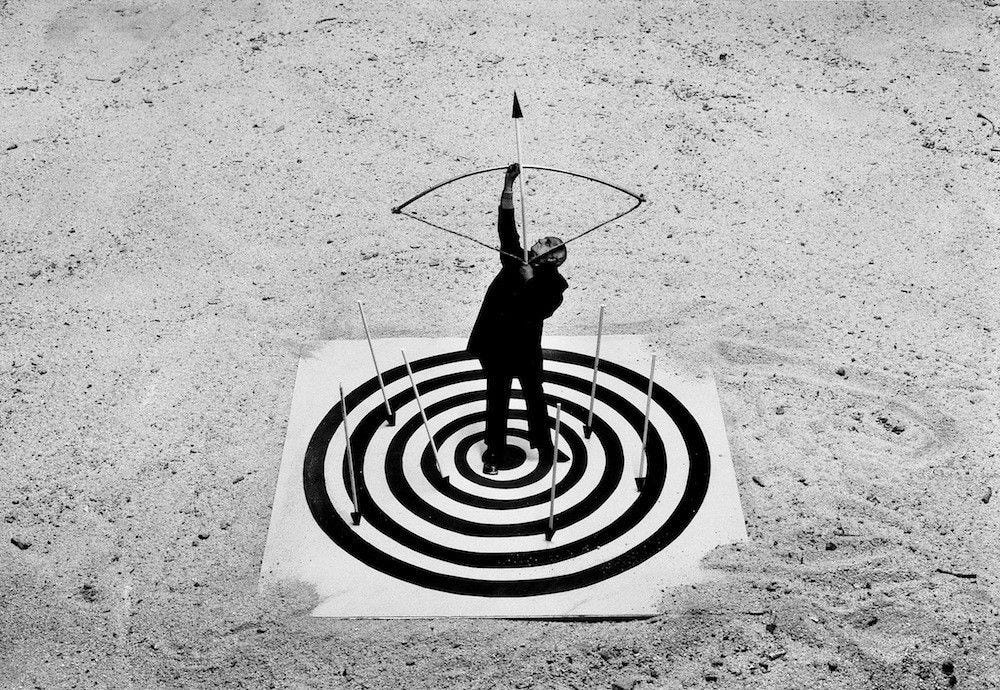
But Faustus does not listen. He is too lit up by the fact that—holy hell, I’ve just conjured a devil!—and that he surpassed the presupposed limit and made contact with something the universities could never give him. He sends Mephistopheles back to Lucifer with some terms: twenty-four years of Mephistopheles as his servant, his instrument—and at the end of it, his soul. Signed, sealed, delivered in blood. And as soon as he does, the words Homo fuge—Latin for “O man, fly”—appear branded on his arm. Oh man, indeed.
Armed with the keys to all creation, Faustus does not unlock the secrets of the universe. No, he ends up putting on dinner shows for the wealthy (and it’s worth noting that Faustus was born of humble beginnings). He conjures the ghost of Helen of Troy for audience. He plays tricks and satisfies trivial curiosities. The man who elevated himself societally—who earned a doctorate and became a highly renowned scholar at the University of Wittenberg—and who could not bear the limits of medicine and law and theology is now spending his extraordinary, purchased, unrepeatable years performing parlor tricks. Unsurprisingly, the hunger that could not be satisfied by all of human knowledge is not satisfied by supernatural power either.
He thought mastery would mean more—more freedom, more aliveness, more limitlessness, more world! What it meant was way, way less. He became a trick himself. A clockwork figure, winding through the motions of a life, mistaking the motions—travel, yes, and fame, and spectacle, and power—for life itself.
Twenty-four years pass and he has arrived at the moment he’s been dreading. He is alone, and he begs—God, time, anyone who might listen—and no one renegotiates with a man who signed in blood. At midnight, a host of devils appear and off to hell he’s dragged.
In the morning, some scholars find Faustus’s limbs and decide to hold a funeral for him.
This is Christopher Marlowe’s The Tragical History of the Life and Death of Doctor Faustus, written in the early 1590s and often considered the first great English tragedy. It draws on the legend of a real person—Johann Georg Faust, an alchemist and magician of the German Renaissance (a time of great scientific progress—the printing press, the heliocentric model of the solar system, gunpowder, and the first anatomical studies to name a few) who became the subject of folk legend in the years after his death—and it is, among many versions of that legend.
Goethe’s later retelling, completed over the course of his entire lifetime, tells a different story. His Faust is less a man of hubris and more one of desperation—desperate to feel something, anything that makes life seem worth living. His Faust makes the same bargain but this Mephistopheles—wittier, more sly—has different terms. Here, Mephistopheles must deliver one moment of such perfect satisfaction that Faust will turn to it and say, “Verweile doch! du bist so schön” translated as “Stay! You are so beautiful” or “Linger a while! You are so fair.”
Faust never does. He seduces and ruins, strives and fails and strives again, causes genuine suffering, and yet through all of it remains unreachably restless, always already reaching for what comes next. When he dies, the angels catch him, because in Goethe’s moral universe that very restlessness—that inability to be fully possessed by any single moment—is itself a form of grace.
Salvation here is the very consequence of being alive: meet each moment with open hands and never mistake any single experience—however beautiful! however terrible!—for the last word on existence. The soul that remains open to the world cannot be owned. And sure, his restlessness is also a tragedy—it’s the thing that makes Faust so destructive and unsatisfied. The inability to be satisfied can also be an incapacity for anything deeper—a kind of grasping that looks like openness but is really just another form of possession, always needing the next thing to complete what the last thing couldn’t. This is the other face of the Faustian bargain: the belief that the next thing will finally be the one that delivers. That if we just know a little more, go a little further, have a little more, feel a little more intensely—we will arrive. Goethe knew this too, so he shows us the wreckage, but he saves Faust anyway.
What Marlowe’s Faustus cannot accept even as the clock strikes midnight is that to be fully human is to be permanently, productively incomplete. The dissatisfaction he treats as a problem to be solved is in fact the condition of his aliveness. The limit he pushes up against is the very thing that keeps the world open to him, strange to him, capable of surprising him. You cannot encounter anything real if the thing you meet has no power to exceed your grasp. Encountering requires otherness. It requires that there be something you do not yet know and cannot yet control.
And so when he purchases the answer to that incompleteness—when he trades the open wound of not-knowing for twenty-four years of mastery—he does not get more world. He gets less. So much less.
We are in Faustian times, my friends, and the bargain is so boring. Faced with a question, we seek an answer. Faced with confusion, we seek a diagnosis. Faced with grief, we seek frameworks. Faced with loneliness, desire, mortality, meaninglessness, we search for models, language, definitions, resources, a sense of completion. We cannot sit still. We cannot sit in silence. We cannot bear the experience of not being stimulated. When posed with a question, the suffering is far too great to think toward the answer—we reach for our phones and, voilà, the answer. Our greatest, most beauty-laden questions cannot sit long enough to change us, expand us, irritate us, ruin us.
So what happens when society collectively makes Faust’s bargain?
Keep reading with a 7-day free trial
Subscribe to The Phenomenological Society to keep reading this post and get 7 days of free access to the full post archives.